A Visit to Great Sand Dunes National Park And Preserve
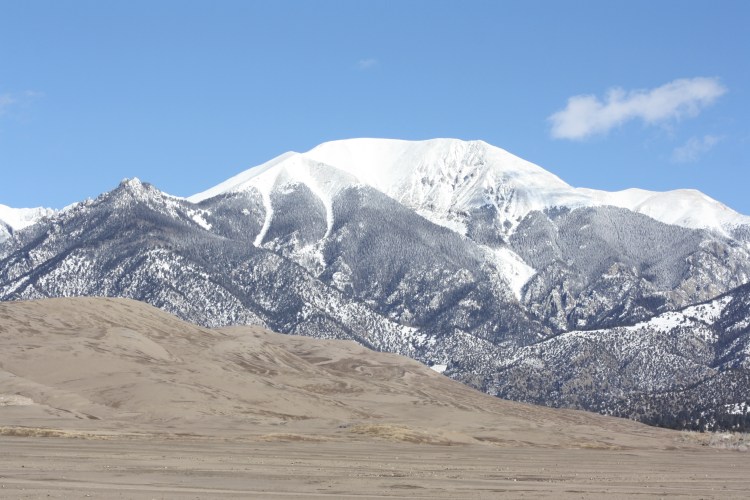
Over the holiday period, I decided to travel to Great Sand Dunes National Park and Preserve. You see, this particular national park is on my bucket list, specifically, it has always been a bucket list goal of mine to take a picture of the Milky Way with the dunes in the foreground.

Great Sand Dunes National Park and Preserve is located about 3.5 hours southwest of Denver in rural Alamosa County, Colorado. The park itself is about a 40-minute drive away from the city of Alamosa–making it a great day trip or night trip, or maybe a bit of both.

I stayed there over the July 4th weekend with the hope that I’d be able that desired shot of the Milky Way glowing over the dunes.

Alas, I have to be honest and say that that unfortunately I wasn’t able to get that desired shot (astrophotography teaches you to roll with the punches). However, I still think I got a pretty nice shot all the same within the confines of the park.

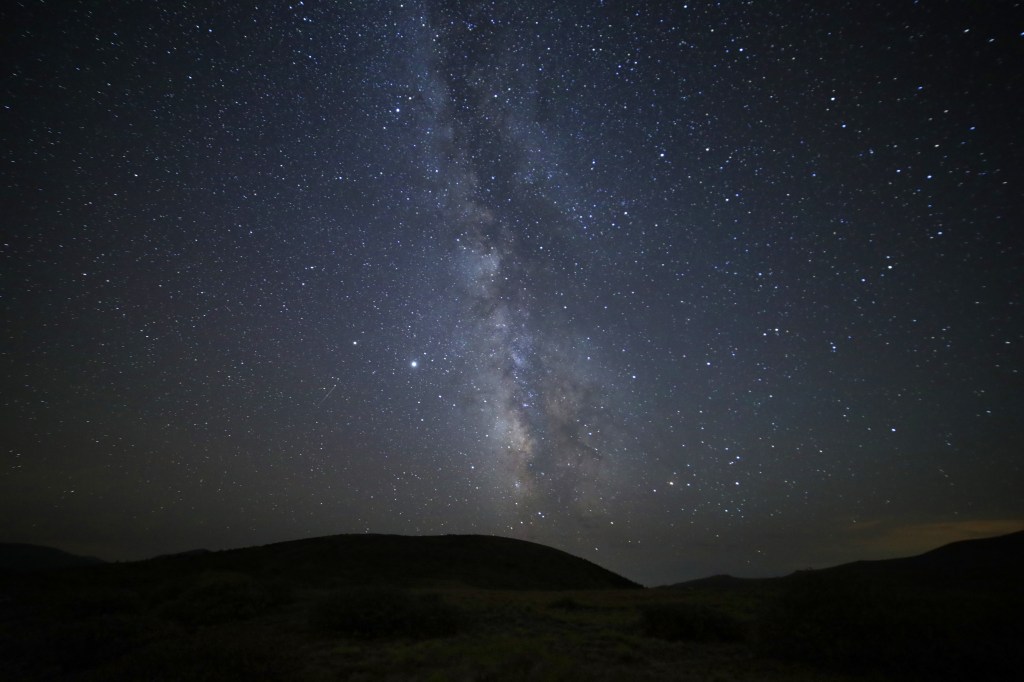
P1: The Milky Way as seen from inside Great Sand Dunes National Park and Preserve.

Sometimes, you have to work with what you have.

While I went there with the hope of braving the dunes at night to get my desired shot, I don’t think I made it 10 feet from my car before the mosquitos were trying to bite me up. I don’t know how, but somehow, I forgot about the mosquitos in June and July and how truly annoying they could be.

Given the bugs, I decided to find a different location to try to see if I could get my shot.

While driving around at night, I parked my vehicle and just decided to use the road into the park as my foreground as I figured it would be a pretty striking visual.

I wasn’t disappointed.

Initially it was stormy, but the weather forecast rang true and it cleared up at about 3am. I waited a bit for the Milky Way to be centered with the road and took the above shot. It’s not a stacked shot, but a single exposure, but I am still proud of it all the same.

I think anyone interested in astrophotography should definitely put this park on their travel list. I have looked all over trying to figure out where these skies fall on the Bortle scale (a scale measuring the brightness of a sky–10 being the worst (lots of light pollution) while 1 is the best (being little to no light pollution), and while I have not seen anything definitive, I have read on some sources online that the park is classified in the Bortle 2 area.

Picture Stats:

P1

Date Taken: July 4, 2021

Canon 5D Mark IV
Rokinon 14mm f/2.8
ISO 3200
Exp. 30s 
White Balance 3200
Alone With My Thoughts…The Appeal of Astrophotography.

While many people appreciate the products of astrophotography, i.e. beautiful photos of the celestial heavens, far fewer people are really interested in the process that leads to said photos.

Honestly, that’s okay.

To be fair, driving to the middle of nowhere so that you can be in the middle of nowhere to take pictures of the night sky with the hope that the weather will cooperate probably won’t sound super appealing to a lot of people.

I’ve asked people if they wanted to tag along with me on my excursions, but generally people have plans or tell me they really prefer sleeping as opposed to trouncing around in the wilderness in the dark. That’s fine–I am not offended.

However, I have found the whole astrophotography process to be pretty meditative.

When I am driving to a spot, I put on music I like to break the silence of the drive there. It gets me in the mood to to speak. Usually, I will pick something ambient for the drive.

When I get the spot, I set up my equipment and once that is done, I’m waiting for it to get dark. Normally, most people are leaving the area by this point or I am by myself. Rarely will other people stick around, but I have run into other astrophotographers out in the wilds of Colorado.

I may get the occasional question from a hiker or family leaving wondering why I am just arriving and I explain what I plan to do.

As it gets dark, that is when celestial objects start to appear–first a couple stars, then more and more. Planets shine brightly and appear as super vibrant stars. Soon, the Milky Way becomes visible.

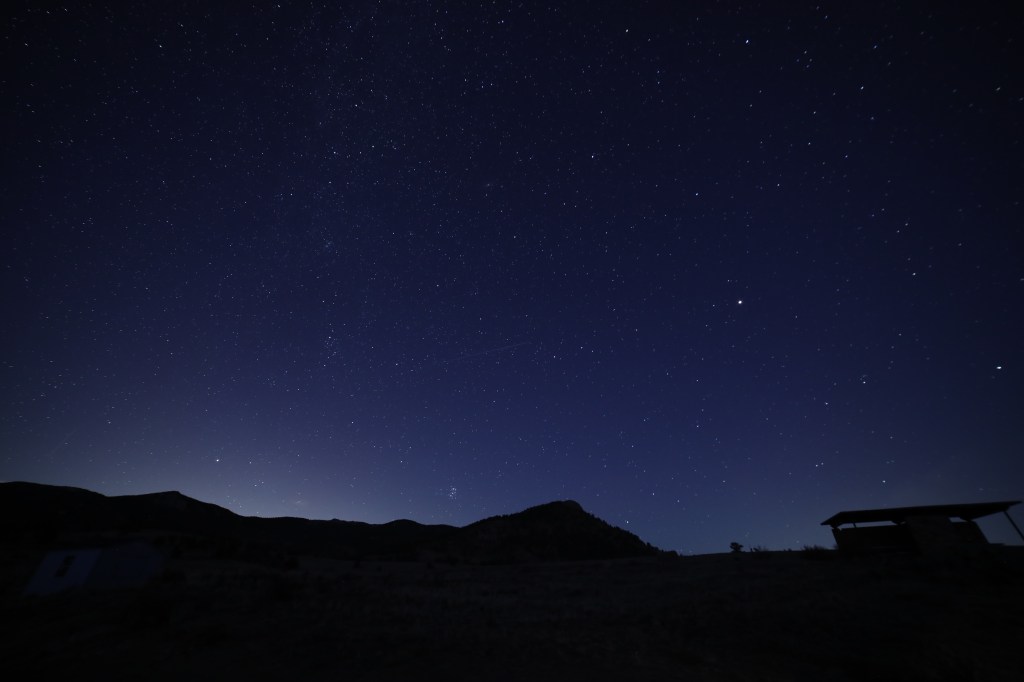
Stars peeking out after the sun sets. Taken in Park County, Colorado.

Every time I see the Milky Way, I really am in awe of it.

Honestly, I like sitting on something–maybe the ground or a camping chair I brought with me or maybe I am sitting with the door open in my car or on a sturdy structure that happens to be in the area.

I am just looking into infinity. That is what it feels like to me.

I feel like I am witnessing something sacred and ancient. I am seeing something that existed long before I ever set foot on this Earth and will continue long after I pass away. I feel so small, but also intimately connected to everyone and everything. Carl Sagan once said we are made of star stuff–I think that is a great way of explaining how we are all interlinked in this thing called existence.

The things that worried me or bothered me me earlier–well, I start to revaluate. Maybe that thing I was obsessing over in my mind wasn’t that big of a deal and I need to let it go. Or maybe that thing that is kind of a big deal–well, let me revaluate the things that are in my control versus the things that are not in my control because I can only do so much.

I honestly couldn’t tell you the how of how I go through this process, I can only tell you that it happens.

Seeing the stars puts me as ease. Can’t really explain the why. Milky Way rising above the horizon near Guanella pass.

Being in the wilderness is my sanctuary of sorts. Seeing the celestial bodies in the sky is my sermon of sorts.

A Visit to Pawnee National Grasslands

Once I got that first astrophotography picture, I was absolutely hooked. I wanted to go out, wanted to go to different locations, wanted to try to photograph different things, wanted to try to capture as many celestial objects as I could, etc.

I believe I went up to that same location outside Idaho Springs a few times before I decided to try somewhere else. Specifically, I decided to try Pawnee National Grasslands (“PNG”).

Pawnee National Grasslands is located in the northern part of the state–in a very rural area. One of the major points of interest there are the Pawnee Buttes which jut out in what is otherwise mostly plains.

One of the things that fascinates me about Colorado is the range of geography you’ll find in the state. I first visited the mountains in the west for my first serious attempt at astrophotography. My next major attempt would find me in the plains and brush to the north.

The drive out there was super interesting.

It was desolate. I was absolutely glad I wrote down directions because I am pretty sure I lost my phone signal several times while driving. While there were farms dotting the landscape, they were very spread out. As I neared PNG, it got the point where it was just me and the occasional vehicle passing by.

I wish I had taken pictures of the plains area during the drive, because it was beautiful in a rustic way.

When I arrived at the park, there was one other vehicle there that appeared to be prepping to leave the park. When they left, it was literally just me–I didn’t see a single other person there.

Pawnee National Grasslands as the sun was about to set. Taken with my iPhone at the time. I don’t remember the model of the phone.

By the time I arrived, it was twilight and I needed to get moving because I realized after a few attempts in the mountains that it is truly is a pain to set up your gear in the dark and it’s better to do it before the sun sets.

I set up my camera just a a few hundred feet away from my car into the entrance area of the grasslands.

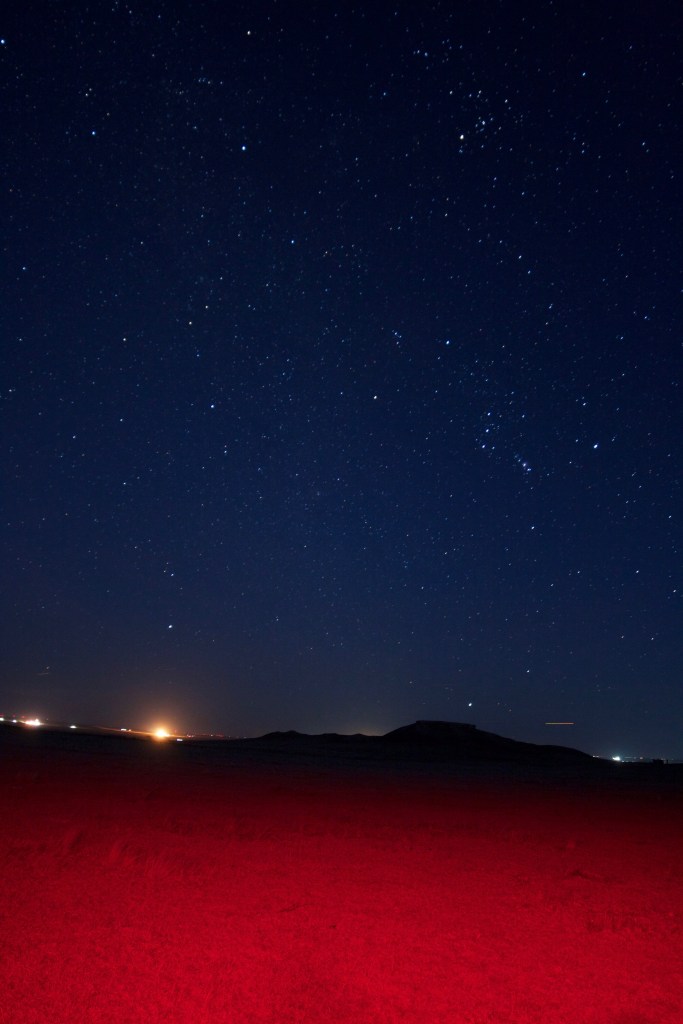
As it got darker, I was in for a quite a show as the stars started to show themselves. As it got darker, I turned on the red headlamp I had purchased in so I could see the buttons on my camera in the dark and also not cause too much disruption to my picture-taking.

The number of stars in the sky was indescribable. I felt like I actually got to see the sky in its true glory that night.

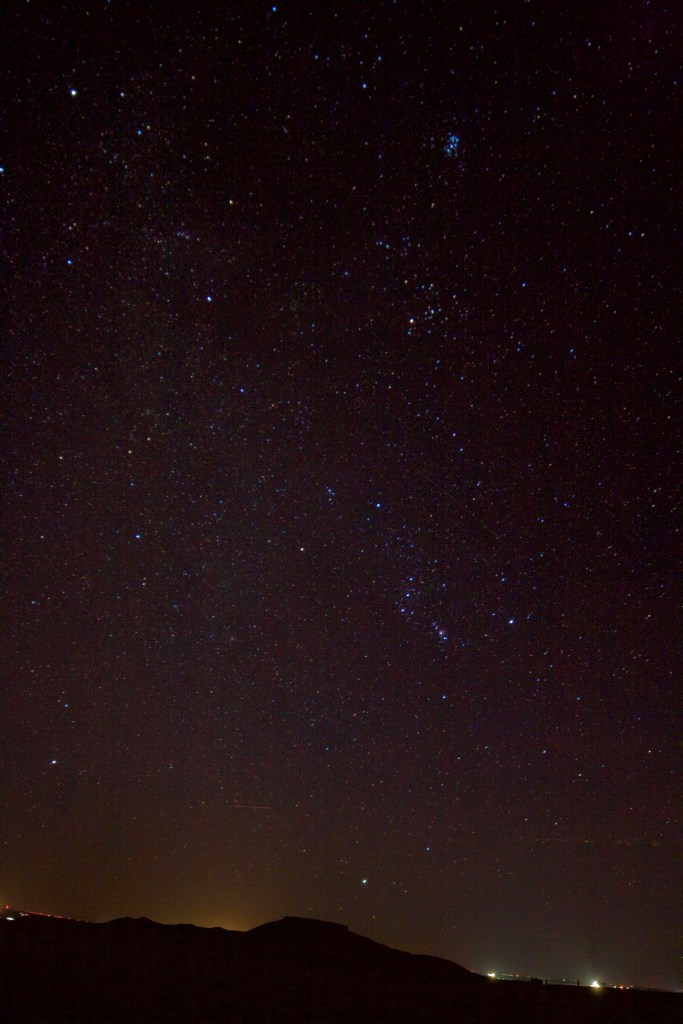
Taken in the parking lot as I was about to leave. Taken with my Canon 1000D.

I took as many pictures as I was able to. I ultimately stopped because…it was still winter and thus very cold. I also heard an animal noise that I could not quite identify. While I had on layers to protect myself from the cold, I didn’t have anything to physically protect myself should I encounter anything in the wild.

Erring on the side of caution I gathered my camera equipment and headed back to my car.

I was out there for about 2 hours or so. Even though I ended my excursion early, I was satisfied with what I could capture.

Yet still, there was that feeling that what I saw with my own eyes wasn’t quite translating to what I wanted to capture with my camera. Again, I suspected my camera was pretty dated–it was over 10 years old by this point.

This excursion was the one that motivated me to purchase a more modern camera.

Picture 1 Picture 2Picture 3
ISO: 800
Exposure: 25s
F/0
Lens Mode: Manual
Lens: 18mm-55mm
ISO: 800
Exposure: 30s
F/0
Lens Mode: Manual
Lens: 18mm-55mm
ISO: 1600
Exposure: 20s
F/0
Lens Mode: Manual
Lens: 18mm-55mm
See above if you are interested in the settings used for the pictures above.

Astro Lessons Learned:

  • Research the area that you plan to visit ahead time: Are there certain hours where the area is open? Is there a fee involved? Do you need to obtain a permit ahead of time? Is parking limited? Is parking limited to certain times out of the day?
  • Write down directions for the place you are heading to, research the route ahead of time, and bring a map with you. The best places to see the brightest stars will often be in rural areas with literal dirt roads and possibly poor to no signage. Also, GPS/phone signals may be spotty in these areas.
  • Arrive at least an hour before sunset so you have enough time to find a spot to set up your equipment.
  • Carry multiple layers with you because the weather can turn unpredictable.
  • Carry a red light headlamp or a flashlight with a red light so you have a light source. You don’t want to accidentally step on a rattlesnake in the wild. While you can go with a regular headlamp or flashlight (I did so initially), the bright white light will affect your eyes, your ability to see faint stars, and will be distracting in your photographs.
  • Always let someone know your itinerary!

My Relationship With Cameras

I used to see photographs of the night sky, celestial bodies, or even galaxies and wonder at how people were even able to take those kinds of photographs.

I remember showing a college friend a picture of the Milky Way rising over the horizon and she thought it was fake and photoshopped. In hindsight, I guess I don’t blame her. When you grow up in light-polluted areas like the two of us did on the East Coast, from our perspectives, the actual night sky actually looks really fake.

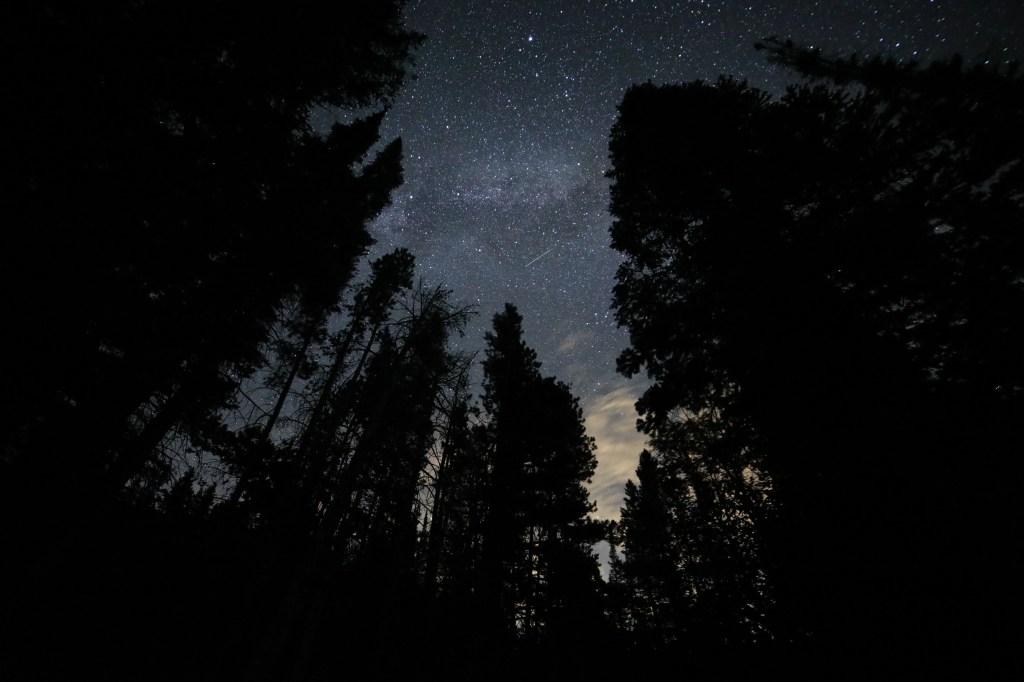
Absolutely stunning, but also absolutely foreign to someone who is exposed to roughly twenty years’ worth of light pollution. A nighttime shot taken at Rocky Mountain National Park in the summertime. Photo taken with Canon 5D Mark IV.

Anyway, I still enjoyed learning about space, looking at astronomy pictures, and also watching sci-fi movies focused on space.

Did I ever pursue a career related to astronomy later in life? No. I guess you could say that I went in the opposite direction career-wise. However, that is a post for another day.

In high school, my mom bought me a Canon Powershot S3 IS. It was a simple, albeit satisfactory point-and-shoot camera. I later learned it got this moniker because in spite of the variety of camera settings, you could spin the dial to a camera setting, point the camera, press the shutter release button, and get a decent shot.

That camera was fine for a teenage girl who wanted to take pictures of squirrels at the park or take pictures of friends drinking boba tea or take pictures of relatives at family events. However, it was absolutely terrible for night sky photography as I learned when my few attempts at Milky Way photography resulted in weird, streaky lights in a background of black. Disappointed, I left astrophotography alone.

In college, I was still really interested in astronomy, but it mostly focused on looking at photography books or looking at pictures on Image hosting websites (Do you remember Fotki?!?). I even signed up for an introductory level astronomy course, but withdrew from the class when I felt as if the professor was speaking an entirely different language.

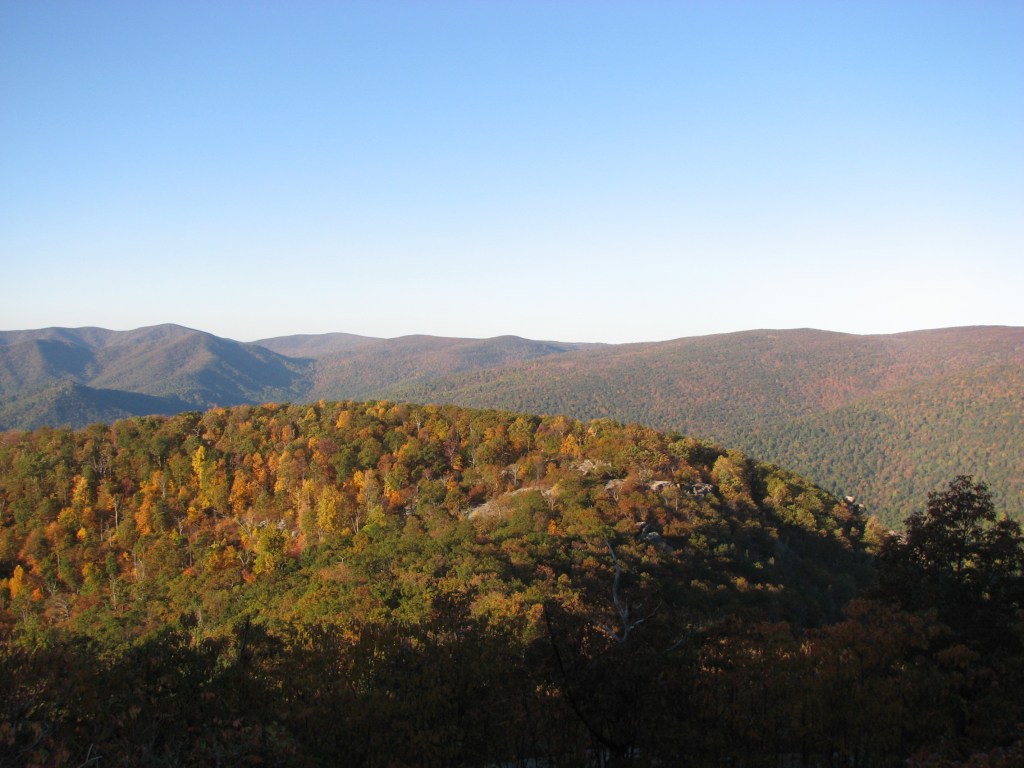
Taken with my Canon Powershot S3 IS . Overlooking a cliff with fall foliage on display during a college hike in western Virginia.

When I graduated from college, not only did my mom present me with a bouquet of flowers, she also gave me a really nice camera as she knew I loved taking pictures of anything and everything. I was gifted with a Canon Rebel XS aka Canon 1000D.

It was my first “serious” camera. I retired my Powershot and used the 1000D to photograph everything. I actually started googling how to do astrophotography online. In my 15 minutes of research, my takeaways were that I needed a tripod and I needed to go somewhere dark.

Purchase tripod? Check.

Find a dark area? Backyard of mom’s house should work. Cool beans.

As you can guess, it was a failure again. While I had not put in a lot of research into the proper setup for astrophotography, astrophotography seemed too technical for me to grasp.

While I loved looking at astrophotography, I had more-or-less resigned myself to someone who would see astrophotography, but never do astrophotography.

While I took my 1000D with me when I criss-crossed the country for school and work, it wasn’t until after I graduated from graduate school, left a fellowship, and started working that I began looking at the “how to” behind astrophotography.

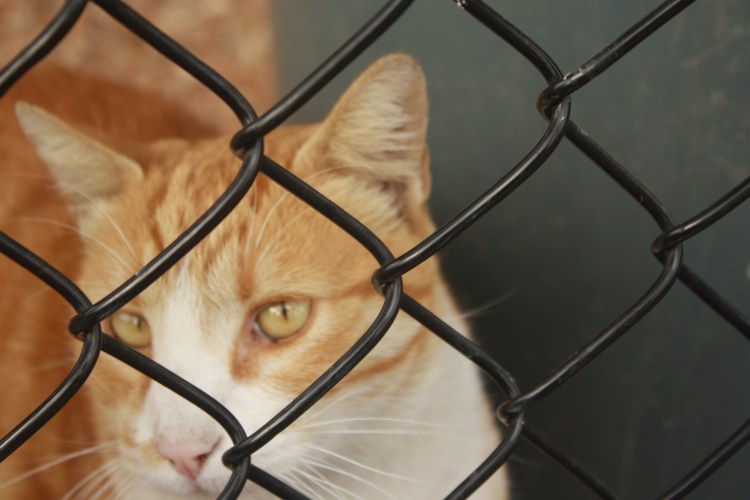
My 1000D was able to get some great details. A curious neighborhood cat looks through a fence. Photo taken near my former workplace with my Canon 1000D.

Why?

I was living by myself with no family within a 1000 mile radius in the middle of the pandemic.

I think now would be a good stopping point, since I was definitely in my feelings in the middle of the pandemic when I actually took up astrophotography in earnest. I will save that for another post.

How it all started…?

I just happened to come across a photo of the night sky taken somewhere in the desert.

It might have been right as I was nearing the end of high school or maybe right before I started college.

I had a habit of going through deviant art profiles because I loved the heavily photoshopped images showing planets placed into some random starry background.

I also had a habit of going through NASA’s Astronomy Photo of the Day.

On NASA’s website, I came across this photograph of the Milky Way arching across the horizon of some desert at night. I was absolutely mesmerized by what I saw. It didn’t seem real, but there it was.

Credit: Dan Duriscoe and National Park Service

It was beautiful, mesmerizing, eye-catching. That picture was all of those things.

The picture was taken on a clear night in Death Valley National Park.

It was beauty somehow captured into a photograph.

It sounds really dramatic, but I really was in awe at what I was seeing.

I knew that I wanted to try to do the same. I later learned that this particular field of photography was called astrophotography, literally taking photos of the night sky and celestial objects.

I started googling it and learning as much as I could about astrophotography…given the limitations of my dial-up internet and really janky computer.

And that is how my interest in astrophotography started….