My Relationship With Cameras
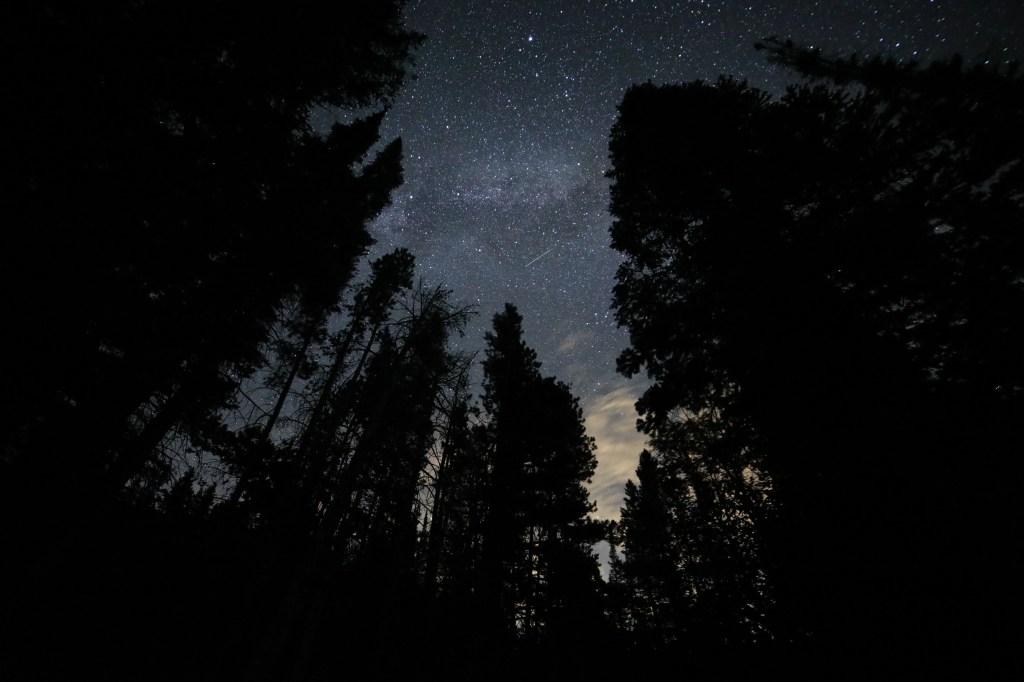
I used to see photographs of the night sky, celestial bodies, or even galaxies and wonder at how people were even able to take those kinds of photographs.
I remember showing a college friend a picture of the Milky Way rising over the horizon and she thought it was fake and photoshopped. In hindsight, I guess I don’t blame her. When you grow up in light-polluted areas like the two of us did on the East Coast, from our perspectives, the actual night sky actually looks really fake.
Anyway, I still enjoyed learning about space, looking at astronomy pictures, and also watching sci-fi movies focused on space.
Did I ever pursue a career related to astronomy later in life? No. I guess you could say that I went in the opposite direction career-wise. However, that is a post for another day.
In high school, my mom bought me a Canon Powershot S3 IS. It was a simple, albeit satisfactory point-and-shoot camera. I later learned it got this moniker because in spite of the variety of camera settings, you could spin the dial to a camera setting, point the camera, press the shutter release button, and get a decent shot.
That camera was fine for a teenage girl who wanted to take pictures of squirrels at the park or take pictures of friends drinking boba tea or take pictures of relatives at family events. However, it was absolutely terrible for night sky photography as I learned when my few attempts at Milky Way photography resulted in weird, streaky lights in a background of black. Disappointed, I left astrophotography alone.
In college, I was still really interested in astronomy, but it mostly focused on looking at photography books or looking at pictures on Image hosting websites (Do you remember Fotki?!?). I even signed up for an introductory level astronomy course, but withdrew from the class when I felt as if the professor was speaking an entirely different language.

When I graduated from college, not only did my mom present me with a bouquet of flowers, she also gave me a really nice camera as she knew I loved taking pictures of anything and everything. I was gifted with a Canon Rebel XS aka Canon 1000D.
It was my first “serious” camera. I retired my Powershot and used the 1000D to photograph everything. I actually started googling how to do astrophotography online. In my 15 minutes of research, my takeaways were that I needed a tripod and I needed to go somewhere dark.
Purchase tripod? Check.
Find a dark area? Backyard of mom’s house should work. Cool beans.
As you can guess, it was a failure again. While I had not put in a lot of research into the proper setup for astrophotography, astrophotography seemed too technical for me to grasp.
While I loved looking at astrophotography, I had more-or-less resigned myself to someone who would see astrophotography, but never do astrophotography.
While I took my 1000D with me when I criss-crossed the country for school and work, it wasn’t until after I graduated from graduate school, left a fellowship, and started working that I began looking at the “how to” behind astrophotography.

Why?
I was living by myself with no family within a 1000 mile radius in the middle of the pandemic.
I think now would be a good stopping point, since I was definitely in my feelings in the middle of the pandemic when I actually took up astrophotography in earnest. I will save that for another post.
 Etienne Rising's Astrophotography Blog